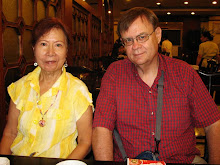
Last year in July, we decided to travel to northern China and look specifically for classic Chinese courtyard buildings. Beijing, of course, has the most famous and the most renovated. Shaanxi, however, has several times more than anywhere else in China. During the Ming and Qing Dynasties, Shaanxi was pretty much the financial center with Pingyao being the most famous. In fact, if one travels in eastern China, one can see the evidence of this success as many of the Shaanxi business people moved to other locations and became equally successful. So why am I writing about this trip in a tea blog?
Our trip began in Yuncheng, Shaanxi and then we traveled to Henan Province so my wife could visit the famous Shao Lin Temple not far from Luoyang. Since Henan is home to one of the top ten teas in classic Chinse tea history, I figured to find some so I could say I bought it in Henan. Thus, for my first tea tasting in Thailand, I dug out the Xin Yang Mao Jian we bought in Luoyang. Chinese Tea Travelers we are!
 Here is the sample of Mao Jian bought in Luoyang. I do not recall the exact price for this, but it was not cheap. I do remember my wife not wanting to buy it because it was too expensive. We bought a half pound from the tea merchant's freezer. It has the characteristics of what I have read about Mao Jians - dark green and tightly dried with points at each end.
 Before actually preparing this tea, I did some search (again) on the internet to find out if it had some interesting features for which I should be aware. At the Half Dipper tea site (my favorite tea site), I read the article on Xin Yang Mao Jian that saved me a lot of pain. Basically, this tea is very delicate and the water temperature has to be just right for the better Mao Jian from Henan. So I followed his advice for the first steep and used cooled boiling water. Was I rewarded?
This tea matched the Half Dippers comments about an expensive tea. It was refreshing, delicate and kind of reminded me a bit of lemons. I immediately shared it with my wife and she was delighted. Only problem was I did not empty the tea out of the teapot (my only expensive teapot) and when I went for more after about six or seven minutes of continued steeping, the tea was flat out bitter. Wew, it was as bitter as any tea I had ever tasted.
More experiments proved that the tea we had bought in Luoyang was probably the real deal. Too hot of water and it becomes common. Steep too long or use too many leaves and it gets really bitter. Do it right and one has truly one of the best teas in China. Amazing stuff this Xin Yang Mao Jian.
 When China Tea Travelers travel they not only look for tea but for tea stuff as well. Here we negotiate for some really fine tea cups. All nice but what I was looking for was the Luoyang Jun pottery made famous during the Ming Dynasty with its three colors. Believe those on the left are the Jun style pottery. Not cheap but we did get a few as well as some of the other ones. Fun to be Tea Travelers indeed.
 After our tea shopping trip, we stopped at a nice small restaurant and had some of the local dishes. This one is the most famous vegetarian dish. We broke out our Mao Jian tea and enjoyed it with our meal.
 This is not a famous pork dish from Luoyang as we have eaten this all over Sichuan. This dish, however, was especially good with our nice Xin Yang Mao Jian.
 I will have more on our trip to Shaanxi and Henan at my Emei blog later on.